
Keynote Speakers
Keynote I (Monday): Kari Leppänen, CEO of Koherent, Finland
New High-Precision Local Positioning System
Abstract:A new local positioning technology, based on radio interferometry in the 5 GHz band and capable of reaching even 0.1mm precision, is introduced. The technology and its capabilities are described. The possible applications ranging from monitoring of large structures to 3D positioning in smart cities are introduced. Finally, the possible future role of local positioning systems as opposed to global positioning is discussed.
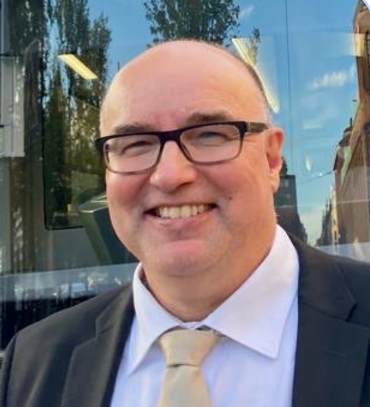
Bio: Kari Leppänen, D. Tech., is the CEO and founder of Koherent, the provider of the most accurate radio positioning technology in the world. Before focusing fully on Koherent in 2020, he used to work in the field of radio astronomy at Aalto University, National Radio Astronomy Observatory (U.S.) and Joint Institute of VLBI in Europe (the Netherlands) as well as in wireless communication at Nokia, Huawei and University of Oulu (Professor of Practice in 6G Flagship Programme).
Keynote II (Tuesday): Valérie Renaudin, Gustave Eiffel University, France
Toward Seamless Navigation for Visually Impaired People: Personalized Gait Learning and Smartphone-Based Guidance
Abstract:Ensuring safe and independent mobility for visually impaired people requires positioning technologies that are both robust and adaptive to individual users. Within the INMOB Labcom project, we developed innovative approaches that not only fuse inertial sensors with environmental features extracted from maps through Bayesian techniques, but also exploit artificial intelligence to learn each user’s own walking pattern. By modeling gait characteristics directly from personal data, the system achieves individualized and more reliable step detection and trajectory reconstruction, even under real-life conditions. We will also share results from live demonstrations with two visually impaired participants guided for eight minutes in the city center of Nantes without GPS, illustrating the feasibility and impact of this technology. This keynote will present the scientific advances behind this approach, the challenges of integrating personalized AI models into smartphone-based guidance and the path toward assistive technologies that combine inclusivity, accuracy and user-centered design.
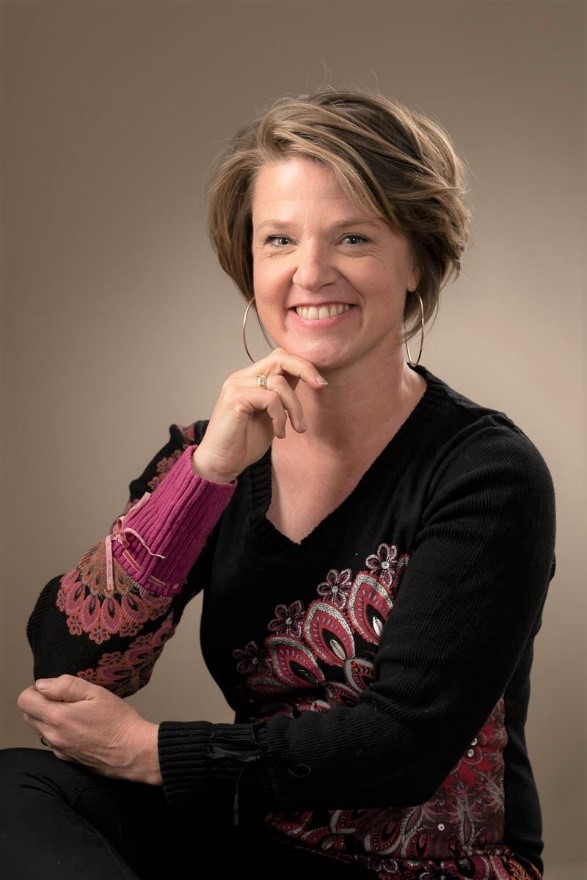
Bio:Valérie Renaudin is a Professor at Gustave Eiffel University, France. She obtained an MSc degree in Geomatics Eng. in 1999, and a PhD in Computer, Communication, and Information Sciences at l'Ecole Polytechnique Fédérale de Lausanne (EPFL) in 2009. Her international career includes positions such as the Technical Director of Swissat in Switzerland, where she pioneered real-time positioning solutions, and a Senior Research Associate at the University of Calgary in Canada. As the Geopositioning Laboratory (GEOLOC) leader at Gustave Eiffel University, Valérie has cultivated a team of experts specializing in positioning and navigation for soft mobility modes for travelers and vulnerable users. Her research centers on indoor/outdoor navigation methods, integrating GNSS, inertial, and magnetic data to enhance sustainable personal mobility, particularly for pedestrians. In 2021, she founded nav4you, a company dedicated to developing location-based services for the safety of firefighters. Valérie is also the founding Editor-in-Chief of the IEEE Journal of Indoor and Seamless Positioning and Navigation (J-ISPIN) and a steering committee member of the Indoor Positioning Indoor Navigation (IPIN) international conference, underscoring her commitment to shaping the future of geomatics and navigation on a global scale.
Keynote III (Wednesday): Olav Tirkkonen, Aalto University, Finland
Channel Charting for robust and versatile pseudo-positioning
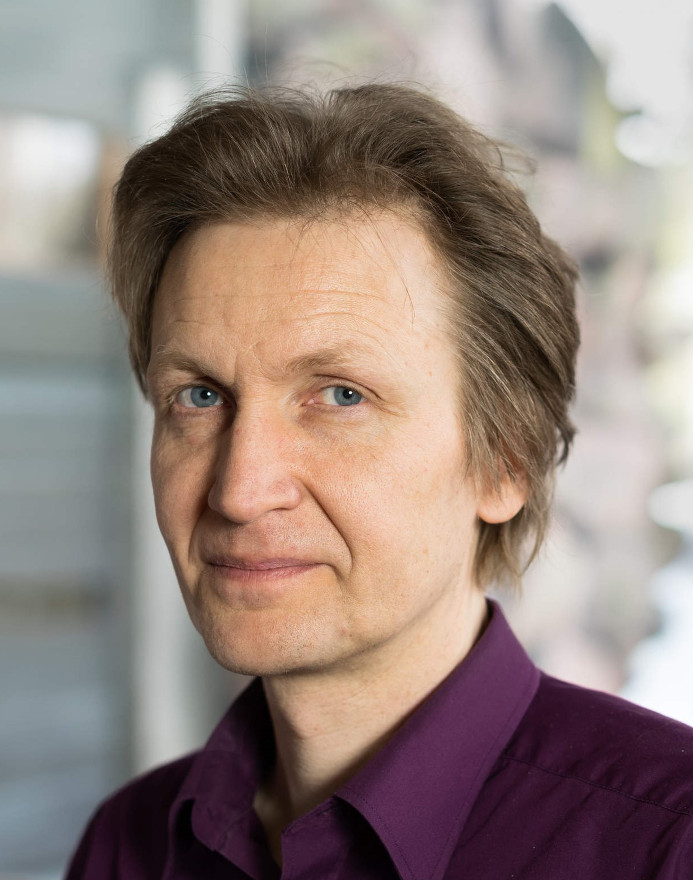
Bio: Olav Tirkkonen is full professor in communication theory at Aalto University, Finland, where he has held a faculty position since 2006. He received his M.Sc. and Ph.D. degrees in theoretical physics from Helsinki University of Technology in 1990 and 1994,respectively. After post-doctoral positions at UBC, Vancouver, Canada,and NORDITA, Copenhagen, Denmark, he was with Nokia Research Center (NRC), Helsinki, Finland from 1999 to 2010. In 2016-2017 he was Visiting Associate Professor at Cornell University, Ithaca, NY, USA. He has published some 300 papers, and is the inventor of some 85 families of patents and patent applications which include 1% of all patents declared essential for the first standardized version of 4G LTE. His current research interests are in coding for random access and quantization, quantum computation, and machine learning for cellular networks. He is a fellow of IEEE and the Asia-Pacific Artificial Intelligence Association. He served as General Chair of 2022 IEEE International Symposium on Information Theory, and currently acts as the chair of the Executive Editorial Committee of IEEE Transactions on Wireless Communications.
Keynote IV (Thursday): Dr. Muhammad Ikram Ashraf, Nokia, Finland
Abstract: In the rapidly evolving landscape of wireless communication, positioning technology has emerged as a pivotal feature, transforming how we interact with the world around us. This keynote will delve into the evolution of wireless positioning from 5G to the anticipated advancements in 6G, highlighting the standardization efforts that are shaping this journey. We will explore the progression of 5G New Radio (NR) positioning, which has significantly enhanced accuracy and reliability for both indoor and outdoor applications. The presentation will address the evolving requirements and use cases that have driven these advancements, focusing on key metrics such as latency and horizontal positioning error. As we transition towards 6G, the keynote will discuss the integration of AI and machine learning (ML) in positioning systems, which promises to overcome challenges in non-line-of-sight (NLOS) scenarios and enhance accuracy to centimeter-level precision. Furthermore, the talk will briefly discuss the future challenges and directions in the field, including the adaptation of ML-based solutions, bandwidth aggregation, and the emergence of new devices with low power high accuracy requirements. The session will conclude with insights into the ongoing 3GPP standardization efforts, particularly in Release 19 and beyond, setting the stage for the next generation of wireless positioning technologies.
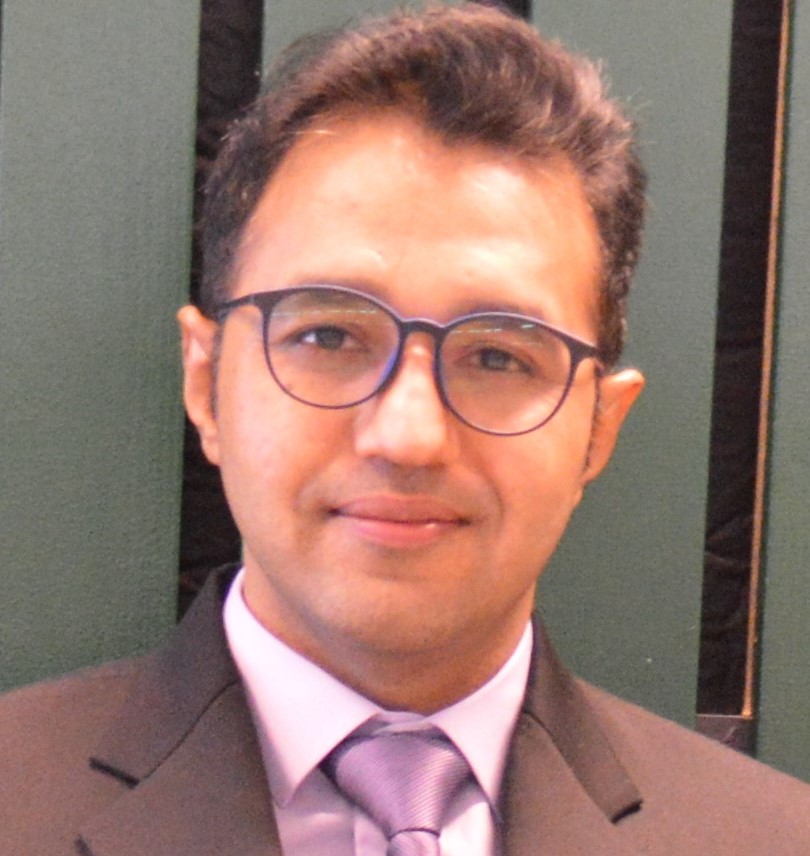
Bio: Dr. Muhammad Ikram Ashraf is a technology leader with over 15 years of experience in wireless communications, IoT, and AI/ML for next-generation networks. He holds a Ph.D. in Communication Engineering from the University of Oulu. At Nokia, Dr. Ikram leads strategic initiatives in 5G/6G standardization, AI/ML-driven air interface design, NR positioning, ultra-reliable low-latency communications, NTN, and industrial IoT. He has played a pivotal role in shaping wireless positioning standards, contributing across multiple 3GPP Releases with driving advancements in AI/ML-driven positioning, and is actively steering the evolution of positioning technologies towards 6G. His work bridges innovation and commercialization, backed by number of granted patents, 50+ publications, and active contributions to 3GPP standardization, along with global collaborations with Ericsson, Nokia Bell Labs, and leading universities.